



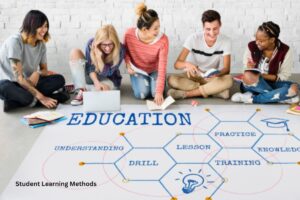
Creative Teacher and Creative Teaching
As a country, we are fixated on pursuing grades and differentiation at each degree of Creative Teaching, and, indeed, schools have fabricated their notoriety in light of the board results they produce. A vital expert risk for educators in this fantastic pursuit has been the need to cover broad substance in restricted timeframes. Regularly, educators who begin with good motives run into this detour. By all accounts, there is a back-and-forth
between the amount to educate and how to instruct it. Assuming Teachers choose the understudy-focused teaching methodology and permit reality for coordinated effort and innovativeness in the homeroom, let the understudies delve profoundly into creative learning in their remarkable styles; they appear to use up all available time to support content required from understudies in customary tests.
.png "Creative Teacher and Creative Teaching")
This asks the conspicuous inquiry: are the two parts of educating – covering content and understudy-focused teaching methodologies – fundamentally unrelated? Or, on the other hand, do we have to devise more inventive ways of protecting content, with a touch of trial and error and investigation of elective approaches to leading classes? How we endeavor to establish a post-pandemic learning climate, consolidating the new computerized proficiency abilities gained by our understudies, oblige their requirement for peer connection, and prod their imagination through new elements of cross-breed understudy drove approaches might well decide the number of entryways of chance we can open for our future.
Education is changing very fast. The world is not the same as before. Students live in a digital age. They see new ideas every day. Because of this change schools must also change. The The Need of Innovative & Creative Teaching is now very clear for modern learning.
Many teachers still use old methods in class. They speak and students listen. This method worked in the past. Today it is not enough. Students need more than simple lessons. They need ideas. They need imagination. They need active learning.
A study shows that innovative teaching methods like problem based learning and interactive lessons improve student learning and critical thinking. These methods can increase learning results and help students understand lessons better.
Websites like Educationalchanges often share ideas about modern education. They show how teachers can improve learning through creativity. When teachers read guides on Educationalchanges they can find simple ways to improve teaching.
The idea is simple. Education should not only give information. Education should help students think. This is why The Need of Innovative & Creative Teaching is growing in schools around the world.
Understanding Modern Education
Modern education is very different from old education. Students today have phones internet and digital tools. They learn from videos games and social media. Because of this teachers must also change their methods.
The goal of modern education is not only memorizing facts. The goal is understanding ideas. Students should learn how to think. They should learn how to solve problems. They should learn how to work with others.
This is where creative teaching methods become important. When teachers use creative activities students become active. They ask questions. They share ideas. They enjoy learning.
Many teachers learn these ideas from Educationalchanges. This website shares simple teaching strategies. It helps teachers understand the value of innovation in the classroom.
The world needs creative thinkers. New jobs need new skills. Because of this the The Need of Innovative & Creative Teaching is stronger than ever.
Why Traditional Teaching Is Not Enough
Traditional teaching focuses on lectures and memorizing information. Students sit quietly and listen. This method may give knowledge but it does not build deep understanding.
Students today need more active learning. They need discussions projects and teamwork. These activities help them understand ideas better.
Research shows that innovative teaching strategies increase student participation and engagement in class. When students are involved in learning they understand lessons more deeply.
Old methods also ignore different learning styles. Some students learn by seeing. Some learn by doing. Some learn by talking. Creative teaching methods support all these learning styles.
Many education experts explain this idea on Educationalchanges. The platform shows how modern classrooms work. Teachers can read about modern education methods and simple strategies that improve learning.
Because of these changes the The Need of Innovative & Creative Teaching is now very important in every school.
Benefits of Innovative Teaching
Creative teaching has many benefits for students. It makes learning active. It also makes learning enjoyable. When students enjoy learning they stay focused.
One major benefit is stronger thinking skills. Creative lessons help students analyze problems. They learn how to think deeply about ideas. Studies show that creative teaching improves critical thinking and learning outcomes for students.
Another benefit is higher motivation. When students take part in activities they feel excited about learning. They want to join the lesson instead of feeling bored.
Creative lessons also build teamwork. Students work together in groups. They share ideas. They learn communication skills.
Websites like Educationalchanges explain these benefits clearly. Teachers can read about student centered learning and interactive learning strategies that improve classroom experience.
All these reasons show why The Need of Innovative & Creative Teaching is growing in modern education.
Creative Teaching Methods Teachers Can Use
Teachers can use many creative teaching ideas in the classroom. These ideas help students become active learners. They also help students remember lessons for a long time.
One popular method is project based learning. In this method students work on real problems. They research ideas and present solutions. This method helps students connect learning with real life.
Another method is collaborative learning. Students work in small groups. They discuss ideas and solve tasks together. This builds teamwork and communication skills.
Teachers can also use technology in education. Digital tools videos and learning apps make lessons interesting. These tools help students see ideas clearly.
Many teachers discover these ideas on Educationalchanges. The website shares examples of innovative teaching strategies that teachers can try in the classroom.
When teachers use these creative methods they support the The Need of Innovative & Creative Teaching in modern schools.
Role of Teachers in Creative Learning
Teachers play a very important role in modern education. They guide students through learning. They also inspire creativity and curiosity.
A creative teacher encourages questions. Students should feel free to share ideas. When students feel safe they become confident learners.
Teachers should also create fun lessons. Games discussions and real life examples make lessons more interesting. These activities help students understand difficult ideas.
Many teachers improve their skills through learning platforms like Educationalchanges. This website offers helpful guides about creative teaching techniques and classroom innovation.
A good teacher does not only give answers. A good teacher helps students discover answers. This approach supports the The Need of Innovative & Creative Teaching and prepares students for future challenges.
How Schools Can Support Innovation
Schools also have a role in improving education. They must support teachers who want to try new teaching methods. Innovation needs support resources and training.
Schools can organize teacher workshops. These workshops teach modern teaching ideas. Teachers learn how to use technology and creative learning strategies.
Schools should also provide digital tools. Computers projectors and learning software make lessons more engaging. Technology supports digital learning environments that students enjoy.
Education experts often discuss these ideas on Educationalchanges. The platform shares examples of schools that improved learning through creativity and innovation.
When schools support teachers they help build a better future. This support makes the The Need of Innovative & Creative Teaching possible in every classroom.
Various methods of being an influential Teacher.
In a new discussion with partners about ‘what makes a creative educator,’ the zinger that arose was the various methods of being a viable instructor. The substance and going with exercises should be contextualized fully, intent on drawing in and spurring understudies who are, in the current environment, for the most part, left all alone to achieve the learning results set out for them. Can we envision our understudies who have learned elective approaches to learning content during the pandemic returning
to the customary homeroom where they sit latently to pay attention to an educator talking at the front of the class? Extraordinary instructing isn’t tied in with allowing the reins to free for understudies to cut out a way for themselves, battling to sort out the thing being educated, and sorting out some way to accomplish the points set out for them. It is essential to figure out what and how much every understudy might be equipped for learning without losing inspiration. Schooling is more about commitment and scholarly feeling giving way to push and accomplishment, rather than test-taking abilities where a similar measuring stick tries everybody.
A new report indicated setting educational plan necessities to what an understudy is prepared for, rather than what they should know at a specific age, and afterward disgracing them if they can’t arrive at those benchmarks. What number of us recollect the horrendous sensation of battling with a recipe, definition, or accurate data that we could not review, while others were quick and effective at imitating the material? Practically all understudies are aware of ‘not being sufficient’ at different phases of tutoring.
.png "Creative Teacher and Creative Teaching")
Not exclusively does this require an essential change in models and styles of working with understudies. Still, it additionally infers that our strategies should be outfitted towards fostering various abilities while tolerating and praising contrasts between understudies. All things considered, when our understudies become experts, they will be functioning as a component of assorted groups where not every person will have a similar level and ability – groups are made to unite bits of a riddle that look in no way like one another, yet they join perfectly to finish a dream.
Combined with an acknowledgment that not every person can be extraordinary at everything, a precise methodology towards assisting understudies with teaming up with one another, utilizing visuals, composing, talking, or coaxing can get such a massive amount out of content that shouldn’t be latently paid attention to. Leaving the customary schoolwork approach may help bring out inspiration and imagination. Contribution from understudies doesn’t need to be text-based – in the present innovation-driven instruction arrangement; understudies can make recordings, webcasts, meetings, melodies, etc. – there is a universe of conceivable outcomes to evaluate learning. For instance, online tests and tests have yet to work for specific schools, especially those with many understudies to make due. Even so, rebuilding the appraisals to incorporate more limited ‘vivas’ – coordinated – with the instructor has been extremely helpful. We may likewise prefer to clear a path for a shift towards open-finished inquiries with no set-in-stone responses except for trying scientific and decisive reasoning abilities. Understudies will invite the change, and adjust rapidly whenever driven by able, roused, and successful educators.
Conclusion
Education must change with time. The world is moving fast. Students face new challenges and new opportunities. Because of this teaching must also evolve.
Creative teaching helps students think. It helps them solve problems and share ideas. These skills are important for the future.
Teachers schools and education platforms like Educationalchanges all play a role in this change. When they work together learning becomes more exciting and effective.
The message is clear. Modern education needs creativity imagination and innovation. This is why The Need of Innovative & Creative Teaching is essential for the future of education.
FAQs
What is innovative teaching
Innovative teaching means using new and creative ways to teach students. These methods include projects discussions and technology based learning.
Why is creative teaching important
Creative teaching helps students think deeply. It improves problem solving skills and makes learning more interesting.
How can teachers use creative teaching
Teachers can use group work projects games and technology. These methods help students take part in learning.
How does technology support innovative teaching
Technology provides videos digital tools and interactive lessons. These tools help students understand ideas better.
Where can teachers learn about creative teaching
Teachers can read guides and ideas on Educationalchanges. The website shares helpful resources about modern education and teaching strategies.
About the Author




I don’t think the title of your article matches the content lol. Just kidding, mainly because I had some doubts after reading the article.
Your point of view caught my eye and was very interesting. Thanks. I have a question for you.